
Introduction
A business website should be more than a digital placeholder. It should answer questions, guide visitors, and make the next step easy.
That only happens when the website is built with the right pages and structure.
Homepage
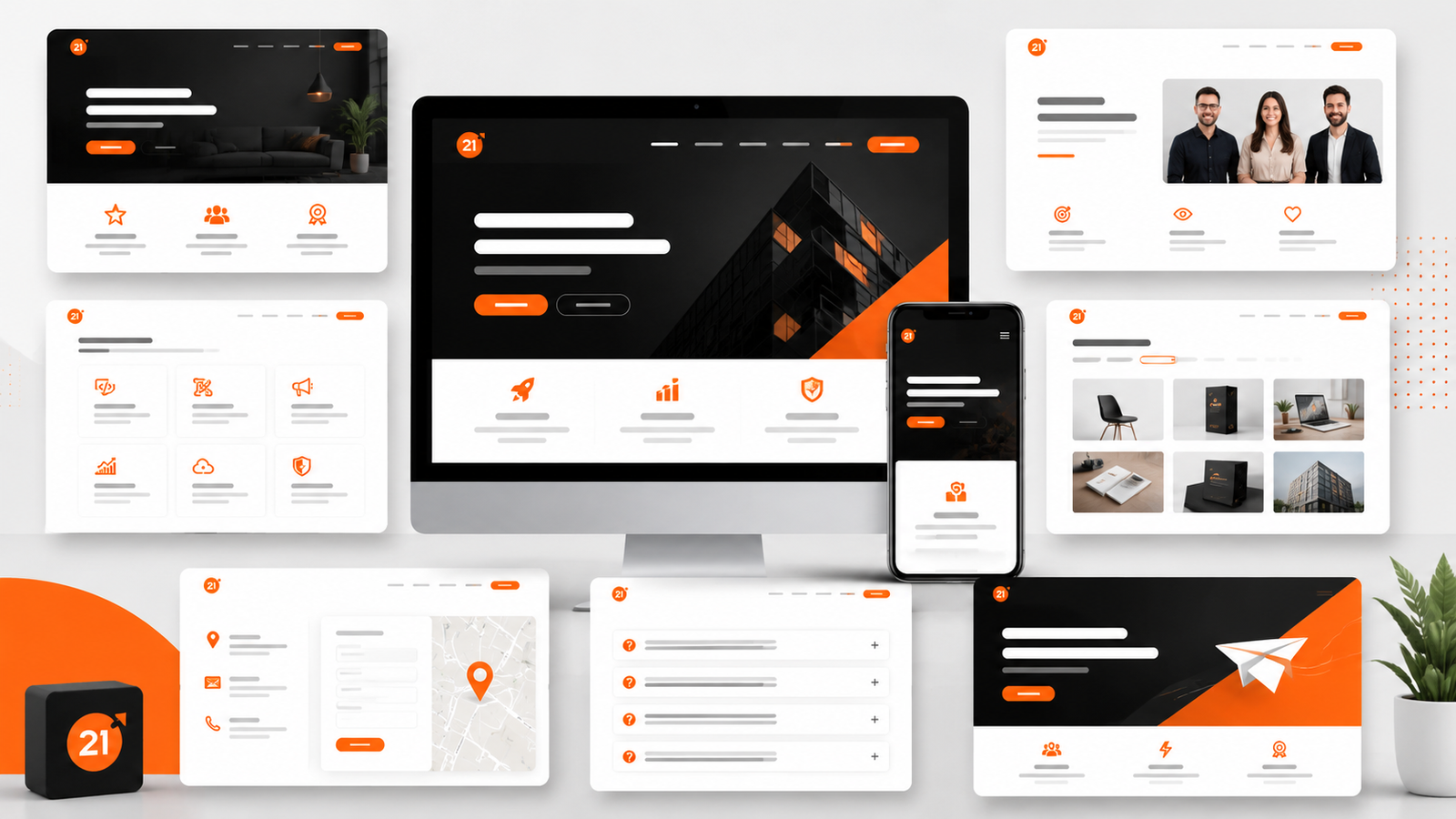
Your homepage is the first impression for many visitors. It should clearly explain what you do, who you help, and what action people should take next.
About page
People want to know who they are dealing with. A strong About page helps make your business feel more human, credible, and trustworthy.
Services page
Your Services page should clearly explain what you offer, who it is for, and how it helps. This is one of the most important pages for turning interest into inquiries.
Portfolio or case studies page
If you want people to trust your work, show it. A Portfolio or Case Studies page gives proof and makes your business feel more established.
Contact page
Your Contact page should make it easy for people to reach out. Keep the path simple with a clear form, email address, phone number, or booking option.
FAQ page
A good FAQ page helps remove hesitation. It answers common concerns around process, pricing, timing, and what clients can expect.
Landing pages
If you run ads or promote special offers, landing pages are essential. They help focus attention on one offer and improve conversion.
Bonus pages that add value
Depending on your business, you may also benefit from:
- blog page
- testimonials page
- pricing page
- resources page
Closing
The right website pages help your business feel complete, clear, and ready for action. Good structure improves user experience, trust, and conversion.
Building or improving your business website? 21Sage branding can help you create the right structure, messaging, and design for a site that actually works.